Choosing an Aluminium Door With Window involves more than matching a frame to your exterior walls. It affects daylight, ventilation, security, insulation, and daily comfort. A beautiful door can still perform poorly if its glass, seals, or installation are unsuitable.
This guide shares seven practical tips based on common homeowner concerns and professional fitting principles. Start by checking the aluminium grade, frame finish, and hardware quality. Powder-coated surfaces should look even, without bubbles, scratches, or thin corners. Glass selection also matters. Double glazing can reduce heat loss and outside noise, while laminated glass may provide added safety. Ask about U-values, weather seals, drainage paths, and the product’s tested performance. Do not trust appearance alone.
Measure the opening carefully, including wall thickness and floor levels. A few millimetres can affect alignment and smooth operation. Confirm whether the door opens inward or outward, especially near furniture, steps, and narrow paths. Local building requirements may also affect ventilation, safety glass, and threshold height. A qualified installer should explain these points clearly.
Some choices are easy to underestimate. Dark frames may become hot in strong sunlight, and large glass panels can require more frequent cleaning. I once assumed a low threshold would suit every entrance; it did not, because water protection needed more attention. Real homes are rarely perfect. Compare warranties, maintenance instructions, and supplier experience before deciding. The best Aluminium Door With Window is not simply attractive. It should fit accurately, close securely, and remain reliable through changing weather.
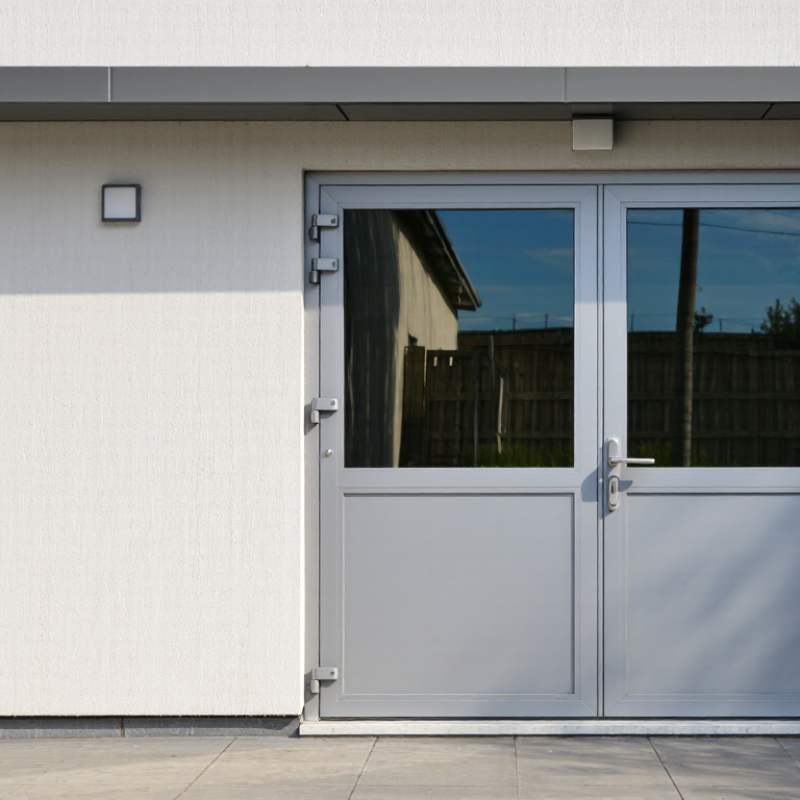
Choosing an aluminium door with a window starts with its purpose, not its appearance. A main entrance may need visibility, security, and weather resistance. A patio door usually benefits from wider glass and smoother daily operation. For a utility room, ventilation and easy cleaning may matter more than a large window.
Location changes the specification. A sunny south-facing opening can make a room uncomfortably hot without suitable glazing. Coastal air, heavy rain, and strong winds also demand durable finishes and dependable seals. Measure the opening carefully, including wall thickness, drainage, and nearby furniture. Small mistakes become expensive later.
Think about access in real situations. Can someone carrying a sofa pass through? Is the clear opening comfortable for a wheelchair or stroller? A low threshold may improve movement, but it must still manage water effectively. Hinged doors need swing space, while sliding doors save room but may require more track maintenance. I once focused too heavily on frame colour and overlooked the handle height. It worked, but it was inconvenient. Check opening direction, lock position, ventilation needs, and emergency movement with a qualified installer. Local construction and accessibility requirements should also be confirmed before ordering.
The chart uses practical planning weights to show where buyers should focus first: define the door’s purpose, confirm its location and exposure, and check the required level of access before comparing frame profiles, glazing, thermal performance, and security features. For accessible projects, verify local regulations; ADA 2010 commonly requires at least a 32-inch clear opening, thresholds no higher than 1/2 inch, and no more than 5 pounds of opening force for most interior hinged doors.
Choose the frame design before judging the finish.
Tip 1: Match the frame depth to your wall thickness. A narrow frame creates a cleaner view, but may offer less space for insulation.
Tip 2: Check the opening direction and handle position. Furniture can make a beautiful door awkward to use.
Tip 3: Consider thermal breaks, especially in rooms facing strong sunlight. They reduce heat transfer through the aluminium frame.
Tip 4: Select the window configuration around daily ventilation needs. A fixed pane gives a wider view, while a tilt-and-turn section improves airflow.
Tip 5: Use larger glass panels carefully. They brighten interiors, but increase weight and may require stronger hinges.
Small details matter.
During site checks, uneven floors often affect door alignment more than expected. Measure again before ordering.
Tip 6: Choose glazing based on the room’s exposure. Low-emissivity glass can support indoor comfort, while laminated glass may improve safety and reduce noise.
Tip 7: Inspect drainage paths, seals, and corner joints. Water should move away from the frame, not collect inside it.
Ask for clear performance data and installation details. A reliable installer should explain tolerances, maintenance, and hardware adjustment.
I would also question overly perfect promises; real homes shift, seals age, and even a well-designed configuration needs occasional checking.
Choosing an aluminium door with a window starts with the glass, not the frame. In real installations, the wrong glass can make a beautiful door uncomfortable. The U.S. Department of Energy reports that windows can cause 25–30% of residential heating and cooling energy use. Ask for insulated double glazing with a low-emissivity coating. It slows heat transfer while keeping daylight clear. Consider triple glazing in colder regions, although its extra weight needs stronger hardware.
Safety deserves equal attention. Tempered glass breaks into smaller granules, reducing sharp fragments after impact. Laminated glass holds together because a plastic interlayer remains attached. It also reduces noise and makes forced entry more difficult, though no glass is unbreakable. For bathrooms or street-facing entrances, choose frosted or patterned glass. It protects privacy without turning the doorway completely dark. Clear glass offers better views, but it may expose your hallway at night.
Check the National Fenestration Rating Council label for U-factor and solar heat gain coefficient. Lower U-factor means better insulation; SHGC should match your climate and sun exposure. The International Energy Agency’s Buildings report continues to identify windows as important elements in building energy performance. Ask about edge spacers, gas filling, and drainage details. Small details matter. I would not choose glass by appearance alone. A darker coating may reduce glare, yet it can slightly change indoor color perception. That trade-off is easy to overlook.
A well-designed aluminium door should keep indoor temperatures stable. Ask for its tested U-value, not just a general energy-efficiency claim. A lower U-value usually means better insulation. Look for a thermal break inside the frame. It separates the cold outer metal from the warm interior. Low-emissivity glass can further reduce heat loss. Double glazing is useful, while triple glazing may suit colder climates. Check the spacer material too. Poor spacers can create cold edges.
Weather resistance deserves careful inspection. Ask for air, water, and wind-load test results. Examine the corners, gaskets, drainage holes, and threshold design. The door should close evenly without forcing the handle. In coastal areas, choose a durable finish and corrosion-resistant hardware. I once focused on appearance and overlooked drainage. That mistake caused moisture near the threshold. Installation quality matters as much as the frame.
Security should feel engineered, not decorative. Choose a multi-point locking system with strong hinge reinforcement. Laminated glass can resist impact better than ordinary glass. Check whether the cylinder resists drilling and forced turning. A secure door still needs a reliable frame connection. Ask for installation details, maintenance guidance, and independent test documents. Local building requirements may also affect glass, locks, and emergency access. Fancy hardware is not always better. Test the handle yourself. Notice loose movement, uneven gaps, or a weak locking sound.
7 Tips for Choosing an Aluminium Door With Window?
Evaluate Measurements, Installation Standards, and Long-Term Maintenance
Measure the opening at three points: top, middle, and bottom. Record width, height, and wall depth. Small differences can affect the frame fit. Check the floor level with a spirit level, especially near thresholds. I once trusted one measurement and regretted it.
Review the door’s opening direction, glass clearance, and drainage path before ordering. Ask the installer how the frame will be anchored to the wall. Proper fixing should follow local building codes and the manufacturer’s installation instructions. Confirm weather seals, flashing, and insulation around the frame. These details prevent drafts and water stains. Do not ignore them. Also check whether the glass suits the room’s sunlight, privacy, and safety needs. A professional should explain the glass rating clearly, not simply recommend the most expensive option.
Think about maintenance before choosing the finish and hardware. Aluminium usually resists corrosion, but coastal air demands more frequent cleaning. Wash the frame with mild soap and fresh water, then inspect seals twice yearly. Keep drainage holes clear. Lubricate moving parts only with a suitable product. Avoid abrasive pads, which can damage the surface. Ask for written maintenance guidance and warranty conditions. Standards can change, and installation quality varies, so keep photos of the finished work. This record may become useful later.
| Tip | Selection Area | What to Evaluate | Practical Measurement or Standard | Long-Term Maintenance | Recommended Action |
|---|---|---|---|---|---|
| 1 | Measure the Opening Correctly | Measure the width at the top, middle, and bottom, and the height at the left, center, and right. Check both diagonals to identify an out-of-square opening. | Record the smallest width and height. A difference between diagonal measurements indicates that the opening is not perfectly square and may require packing or structural correction. | Inspect the frame-to-wall joint annually for movement, cracked sealant, or water staining. | Have the final dimensions verified after removing any old frame. Do not manufacture the door from one measurement alone. |
| 2 | Allow a Proper Installation Tolerance | The door needs enough space for leveling, shimming, thermal movement, and perimeter sealing. An opening that is too tight can prevent correct operation. | The required fitting gap depends on the frame system and manufacturer’s installation instructions. The opening should be prepared to those documented tolerances rather than using a universal gap. | Replace failed perimeter sealant before moisture reaches the wall construction or sill area. | Confirm the required rough-opening dimensions, sill support, fixing points, and packer locations before ordering. |
| 3 | Check Thermal Performance | Compare the complete door-and-window assembly, including the aluminium frame, glazing, spacer, gaskets, and threshold. | Lower U-values indicate less heat transfer. Performance should be stated in consistent units, such as W/m²·K, and should distinguish the whole assembly from the centre-of-glass value. | Keep drainage paths clear and replace compressed or damaged gaskets to preserve weather and thermal performance. | For heated or cooled rooms, consider a thermally broken aluminium frame and low-emissivity insulating glass where climate and energy requirements justify it. |
| 4 | Evaluate Glazing Safety and Light | Consider daylight, privacy, solar gain, impact risk, and the location of the glass near floors, stairs, and circulation routes. | Safety glazing may be required in hazardous locations under local building regulations. Laminated glass retains fragments after breakage, while toughened glass breaks into small granules. | Clean glass with a non-abrasive solution and inspect edges for chips, cracks, or failed insulating-glass seals. | Select glazing according to room orientation and risk. Use opaque, textured, or solar-control glass when privacy or overheating is a concern. |
| 5 | Verify Weather and Drainage Design | Examine compression gaskets, drainage holes, sill slope, flashing, corner joints, and the connection between the frame and surrounding wall. | Performance should be supported by documented air-permeability, watertightness, and wind-load test results appropriate to the building location. European projects may reference EN 14351-1 for external pedestrian doorsets and windows. | Remove dirt from drainage channels and weep holes at least twice a year, and more often in exposed or leafy locations. | Ensure the threshold is supported continuously and that the external sill directs water away from the building. |
| 6 | Match Hardware and Accessibility Needs | Review handle height, opening force, threshold height, clear passage, locking points, hinges, restrictors, and the door’s operating direction. | Clear opening, threshold, and opening-force requirements vary by local accessibility regulations. Confirm the applicable rules before selecting a hinged, sliding, or folding configuration. | Clean and lightly lubricate compatible moving parts according to the hardware instructions. Do not use abrasive cleaners on coated aluminium. | Choose corrosion-resistant hardware for coastal or humid environments and make sure the hardware is rated for the door’s weight and usage frequency. |
| 7 | Plan for Finish Durability and Service | Assess exposure to sunlight, rain, salt, pollution, temperature changes, and frequent use. Confirm how replacement parts and adjustments will be handled. | Powder-coated or anodised finishes should be specified with an appropriate exterior durability classification or project requirement. Warranty terms should clearly cover finish, hardware, glazing, and installation. | Wash exposed aluminium surfaces with clean water and a mild, pH-neutral detergent. Avoid solvents, wire brushes, cement residue, and harsh alkaline cleaners. | Keep installation records, product specifications, colour or finish references, and hardware details so future repairs can be completed accurately. |
Start with the door’s purpose, location, and daily access needs. A patio door may need wide glass and smooth operation. A utility-room door may need ventilation and easy cleaning. Looks are not enough.
Measure the opening width, height, wall thickness, drainage, and nearby furniture. Check the clear passage carefully. A few millimetres can matter. Also record the opening direction and available swing space.
Check whether furniture, wheelchairs, or strollers can pass comfortably. A low threshold improves movement, but it must still block rainwater. Sliding doors save floor space. Their tracks may need regular cleaning.
Insulated double glazing with a low-emissivity coating can reduce heat transfer. Triple glazing may suit colder regions. However, it is heavier and needs stronger hardware. The best choice depends on climate and door structure.
Tempered glass breaks into smaller pieces after severe impact. Laminated glass stays attached to its inner layer. It can also reduce noise and slow forced entry. No glass is completely unbreakable.
Frosted or patterned glass can hide indoor details while admitting daylight. It suits bathrooms and street-facing entrances. Clear glass gives better views. At night, though, it can expose a hallway.
A lower U-factor generally indicates better insulation. The solar heat gain rating should match sunlight and climate. Ask about edge spacers, gas filling, and drainage. Small parts matter more than expected.
Check handle height, lock position, ventilation, and emergency movement. I once focused too much on frame colour. The handle was inconvenient. That mistake still bothers me. A qualified installer should review the details and local requirements.
Choosing an Aluminium Door With Window requires more than selecting an attractive style. Start by defining the door’s purpose, location, traffic level, and access needs. Then choose a frame design and window configuration that suit the building’s layout, available space, and desired amount of natural light. Consider glass options carefully, balancing safety, privacy, noise reduction, and energy efficiency. Different glass types can affect comfort and visibility, so the best choice should reflect the room’s use and local climate.
Before purchasing, check the door’s thermal performance, weather resistance, drainage, seals, locks, hinges, and other security features. Accurate measurements are essential for a smooth installation, while reliable installation standards help prevent drafts, water leakage, and alignment problems. Finally, evaluate long-term maintenance, including cleaning requirements, hardware adjustments, and surface durability. A well-planned Aluminium Door With Window can provide practical access, improved daylight, dependable protection, and lasting performance when its design and specifications are matched to the property’s needs.

Astris Window Systems