Choosing the China best Aluminium Doors And Windows manufacturer requires more than comparing prices or polished showroom images. It demands evidence of thermal performance, structural safety, weather resistance, manufacturing consistency, and after-sales support. The International Energy Agency reported that buildings and construction consumed about 30% of global final energy in 2022. They also produced roughly 26% of energy-related emissions. These figures make the building envelope impossible to treat as decoration.
Performance starts with details.
Dr. Wolfgang Feist, founder of the Passive House Institute, has stated, “The window is the weakest part of the building envelope.” This observation remains useful, although it is not universally complete. Modern Aluminium Doors And Windows can reduce heat transfer through thermal breaks, low-emissivity glass, insulated frames, and precise installation. However, even excellent profiles may fail when drainage, corner joints, or sealing work is poorly controlled. That uncomfortable point deserves attention.
This guide evaluates Chinese manufacturers through measurable criteria, not promotional language. It considers material grades, coating standards, U-values, air tightness, water resistance, wind-load testing, certifications, factory experience, and project references. Reports from the European Commission and ISO-aligned testing practices also show why documented performance matters across different climates. A coastal villa in Miami needs different protection from a high-rise project in northern China. The “best” supplier is therefore conditional, not absolute. It must match the building, budget, climate, and installation team. Simple rankings can mislead. Reliable decisions require technical documents, physical samples, independent test results, and careful communication before production begins.
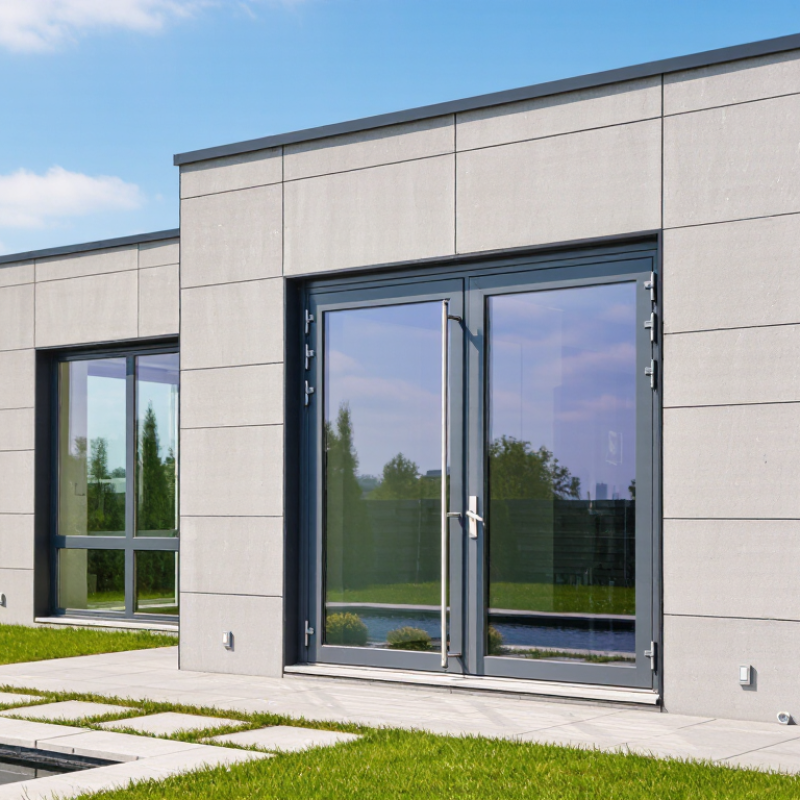
Defining China’s Best Aluminium Doors and Windows Manufacturer
Defining China’s Best Aluminium Doors and Windows Manufacturer
China’s best aluminium doors and windows manufacturer is not simply the one offering the lowest quotation. A reliable manufacturer proves performance through clear specifications, laboratory reports, and consistent production records. Experienced teams should understand thermal breaks, glass selection, drainage, wind resistance, and coastal corrosion risks. Factory visits can reveal more than polished brochures. Look for organized cutting areas, labeled materials, controlled assembly, and realistic quality inspections.
Tips: Request section drawings, hardware details, test data, and warranty terms before ordering. Check how the manufacturer handles measurement errors, damaged glass, and replacement parts. Ask for project references with similar weather conditions. A dependable supplier answers difficult questions directly, even when the answer is not convenient.
Good manufacturers also support installation. They provide packing lists, installation guides, and responsive technical communication. Small details matter, such as corner sealing, frame alignment, and protective film removal. No supplier gets every detail right. That is why transparent correction procedures are important. A cheap system may look impressive in a showroom, yet perform poorly after months of rain, heat, or repeated opening. The best choice is the manufacturer that combines tested engineering, honest communication, stable workmanship, and measurable after-sales responsibility.
6063-T5 Aluminium Profiles with 1.4–2.0 mm Wall Thickness
China Best Aluminium Doors And Windows Manufacturer?
6063-T5 aluminium profiles offer a practical balance for modern doors and windows. The alloy supports clean extrusion, stable dimensions, and a smooth surface finish. Wall thickness usually ranges from 1.4 to 2.0 mm. This range needs careful engineering. Thin sections reduce weight, but poor design can cause flexing near locks and hinges. Thicker sections improve stiffness, yet they can increase material use and operating weight.
Experienced manufacturers inspect profile dimensions during extrusion, not only after fabrication. They check wall thickness, corner accuracy, surface quality, and straightness. A digital caliper can reveal small deviations around screw channels. These details matter during assembly. Poor alignment may create uneven gaps, difficult locking, or unwanted air leakage. T5 temper also requires controlled heat treatment. Inconsistent treatment can affect strength and machining behavior.
Real projects still expose limitations. A 1.4 mm profile may work for a small bathroom window, but not every wide opening. Wind exposure, glass weight, hardware, and installation quality change the result. Bigger is not always better. Engineers should review load calculations before selecting 1.8 or 2.0 mm walls. Powder coating and anodizing also require proper pretreatment, especially in humid or coastal environments. A reliable supplier provides inspection records, alloy details, sample sections, and realistic tolerances instead of vague promises.
China Best Aluminium Doors And Windows Manufacturer? - 6063-T5 Aluminium Profiles with 1.4–2.0 mm Wall Thickness
| Data Dimension |
Reference Value / Range |
Technical Notes |
Common Reference Standard |
| Profile alloy |
EN AW-6063 aluminium alloy |
Widely used for architectural window, door and curtain-wall profiles because of its extrudability and surface-finish quality. |
EN 573-3; ASTM B221 |
| Temper |
T5 |
Cooled after extrusion and artificially aged to achieve the specified mechanical properties. |
EN 515; ASTM B221 |
| Nominal wall thickness |
1.4 mm, 1.6 mm, 1.8 mm and 2.0 mm |
Final thickness should be selected according to span, wind load, sash size, hardware and applicable building regulations. |
Project specification; EN 12020-2 |
| Density |
Approximately 2.70 g/cm³ |
Useful for estimating profile weight and total frame mass. |
Typical physical property of 6xxx-series aluminium |
| Elastic modulus |
Approximately 69 GPa |
Used in structural deflection calculations for frames and extruded sections. |
Typical engineering value for aluminium alloys |
| Coefficient of thermal expansion |
Approximately 23.6 × 10⁻⁶ /°C |
Allowances for thermal movement should be included in installation joints and frame design. |
Typical value for aluminium alloys |
| Thermal conductivity of uninsulated aluminium |
Approximately 200 W/(m·K) |
Aluminium is highly conductive; thermal-break systems are required when improved frame insulation is needed. |
Typical material property |
| Profile manufacturing process |
Hot extrusion followed by artificial ageing |
Die design, extrusion ratio, dimensional tolerances and ageing control affect profile quality. |
EN 755-1; EN 755-2 |
| Typical surface finishes |
Mill finish; anodized; powder coated |
Finish selection depends on appearance, corrosion exposure, colour requirement and maintenance conditions. |
ISO 7599; ISO 28340; applicable coating specification |
| Anodized coating reference |
Common architectural classes: 10–25 μm |
Required coating thickness depends on environmental exposure and the specified anodizing class. |
ISO 7599 |
| Dimensional control |
Profile dimensions and form within the specified tolerance class |
Tolerance requirements should be agreed for wall thickness, straightness, twist, corner radius and cut length. |
EN 12020-1; EN 12020-2 |
| Window and door performance |
Project-specific: air permeability, watertightness, wind resistance and thermal transmittance |
Performance depends on the complete system, including glazing, gaskets, hardware, drainage and installation—not the aluminium profile alone. |
EN 14351-1; EN 12207; EN 12208; EN 12210 |
| Recommended quality documents |
Material certificate, dimensional inspection report, surface-finish report and batch traceability |
Certificates should identify alloy, temper, batch, inspection results and the applicable acceptance criteria. |
EN 10204; agreed purchase specification |
Note: Values shown are general reference data. Final profile selection and performance ratings must be verified against the approved design, local building codes, test reports and project-specific requirements.
Thermal Break Systems with U-Values Below 1.4 W/m²·K
China Best Aluminium Doors And Windows Manufacturer?
Thermal break aluminium systems can achieve U-values below 1.4 W/m²·K when designed as complete window assemblies. The result depends on frame depth, polyamide insulation strips, glazing, spacers, seals, and installation quality. Aluminium conducts heat quickly without an effective thermal barrier. A properly engineered break reduces heat transfer through the frame and improves interior comfort near the glass.
In real projects, I check tested whole-window performance rather than frame data alone. U-values should be supported by laboratory reports, clear calculation methods, and suitable climate assumptions. Double or triple glazing may be selected according to local weather, solar exposure, and energy targets. Poorly fitted joints can weaken excellent factory performance. That mistake is common.
Tips: Request Uw values for the complete unit, not only Uf values for the frame. Confirm glass configuration, spacer type, opening size, and test standards. Inspect corner joints and seals during installation. Small gaps matter. Ask for air, water, and wind-resistance results as well. They reveal practical reliability beyond thermal figures.
A responsible manufacturer should explain limitations clearly. I would be cautious about any promise of “below 1.4” without project conditions. The value may change with sash dimensions, glazing percentage, and hardware design. Even verified data needs careful installation. Thermal comfort is not created by the frame alone; it comes from coordinated design, accurate fabrication, and site workmanship.
Thermal Break Aluminium Windows: U-Value Benchmarks
U-value measures heat transfer through a window assembly in W/m²·K. Lower values indicate better thermal insulation. The 1.4 W/m²·K reference line highlights the performance level specified in the title, while the remaining values represent commonly used reference targets for improved thermal-break and glazing designs. Actual whole-window results depend on frame geometry, glazing, spacer bars, size, and installation.
Comparing Capacity, Certifications, Lead Times, and Warranty Terms
Choosing the best aluminium doors and windows manufacturer in China requires more than comparing prices. Factory capacity matters, but large monthly output can mislead. Ask whether the facility controls extrusion, powder coating, glass processing, and final assembly. A factory may outsource one critical stage. That can affect consistency.
Request current certifications, not scanned certificates from old projects. Check the certificate number, issuing body, product scope, and expiry date. ISO 9001 shows process control, while CE or other market approvals should match your destination requirements. Independent test reports are more useful when they include air leakage, water resistance, and wind-load results. Inspect a sample corner, gasket joint, and drainage hole. Small details reveal production discipline.
Lead time should include drawing approval, sample production, material booking, and shipping preparation. Typical custom orders may need 25 to 45 working days after approval, but complex glazing can take longer. Get each stage written into the quotation. Warranty terms also need careful reading. Ask whether coverage includes profiles, coating, hardware, glass, and installation-related defects. A five-year promise sounds strong, yet exclusions may weaken it. Some suppliers offer longer coverage for aluminium finishes, but only under defined coastal or cleaning conditions. This is where buyers often overlook the fine print. I would also request two recent project references and contact them directly. Capacity looks impressive on paper. Reliability appears during delays.
Conclusion
Defining China’s best Aluminium Doors And Windows manufacturer requires more than comparing appearance or price. A reliable manufacturer should use 6063-T5 aluminium profiles with 1.4–2.0 mm wall thickness to provide strength, dimensional stability, and long-term durability. Thermal break systems with U-values below 1.4 W/m²·K can also improve energy efficiency by reducing heat transfer between indoor and outdoor environments.
Quality should be supported by consistent testing and documented management practices, including performance evaluation under EN 14351-1, air-tightness testing according to ASTM E283, and quality control aligned with ISO 9001. Buyers should also compare production capacity, certification coverage, lead times, customization ability, and warranty terms. The strongest manufacturer is one that combines dependable materials, verified performance, transparent communication, stable delivery schedules, and after-sales support to meet the practical requirements of residential and commercial projects.

 Astris Window Systems