Choosing Aluminium Sliding Doors is not simply a matter of selecting the widest glass panel. Frame strength, thermal performance, drainage, hardware, security, and installation quality all affect daily use. A beautiful door can still rattle, leak, or become difficult to operate. That detail matters.
The U.S. Department of Energy reports that windows may represent 25% to 30% of residential heating and cooling energy use. This figure concerns windows generally, yet it highlights the importance of glass specification and frame design. The 2024 Grand View Research analysis of the aluminium doors market also identifies residential construction, renovation, and energy-conscious design as important growth influences. Market growth sounds impressive. It does not guarantee a suitable product.
Architectural theorist Juhani Pallasmaa wrote, “The door handle is the handshake of the building.” His words remind us that touch, movement, and proportion deserve attention alongside technical ratings. For Aluminium Sliding Doors, inspect the handle grip, roller movement, locking points, and threshold height in person. Ask for tested U-values, air-tightness results, water resistance, and wind-load performance. Check whether those figures apply to the complete door, not only the glass.
A lower-priced system may appear attractive. However, replacement rollers or poor drainage can create hidden costs. Coastal exposure, strong sunlight, and frequent opening also change the decision. This guide compares the evidence, but one uncomfortable truth remains: product quality depends heavily on installation. Even an excellent door can perform poorly when the opening is measured incorrectly.
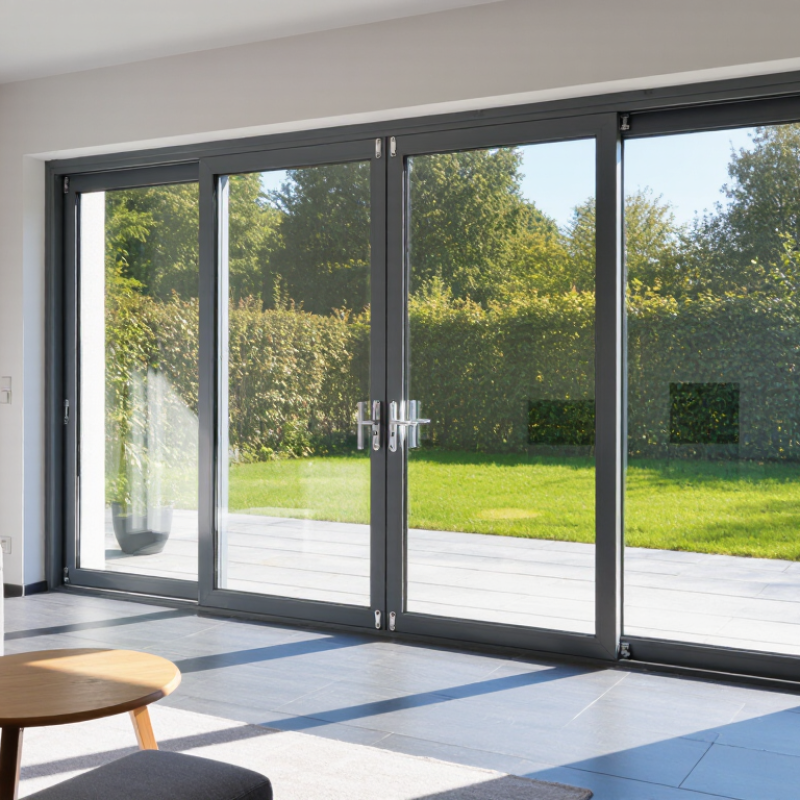
How to Choose Aluminium Sliding Doors?
Define your space before choosing a door style. Measure the finished opening at the top, middle, and bottom. Walls are rarely perfectly square. Measure twice. Note the ceiling height, nearby furniture, and the direction of natural light. A wide opening may look impressive, but it also needs clear wall space for the sliding panel. Check floor levels carefully, especially where indoor and outdoor surfaces meet.
Your opening needs should guide the configuration. A two-panel door suits compact rooms and simpler access. Three or four panels can create a wider passage, but they require more track length and stronger support. Consider which panel should move. A central opening may improve traffic flow, while one-sided movement can protect furniture or planting areas. If the door connects to a balcony, check the threshold height and drainage path. Small details matter.
Frame depth, glass weight, ventilation, and security hardware should match the building’s use. An experienced installer should verify structural support before installation, not after the frame arrives. Ask how the rollers, seals, and tracks will be maintained. Dust collects quickly in lower tracks. It is tempting to choose the largest glass area, yet heat gain, glare, and cleaning access may become inconvenient. I have found that a slightly smaller panel often feels more practical. Leave room for adjustment.
Choosing aluminium sliding doors starts with the metal grade, not the handle or finish. For architectural doors, 6063 aluminium is widely used because it extrudes smoothly and accepts durable coatings. 6061 offers greater strength, but it can cost more and may provide fewer decorative profile options. Ask for the alloy and temper, such as T5 or T6, rather than accepting “high-quality aluminium” as proof. That phrase means little without documentation.
The profile design controls stiffness, insulation, and daily movement. Slim profiles create more glass area, but they may flex under large panels or strong wind. A thermal-break profile uses an insulating strip between interior and exterior aluminium. This reduces heat transfer and limits condensation. Check the profile wall thickness, drainage channels, roller capacity, and brush seals. Frame construction matters too. Mechanically joined corners are easier to transport and repair, while reinforced or welded assemblies can feel more rigid. Poor alignment still ruins either system. I once underestimated installation accuracy; a small floor slope caused noticeable resistance during operation.
Tips: Request section drawings, alloy details, coating specifications, and performance test reports. Compare air leakage, water resistance, wind-load ratings, and roller load limits. Inspect the bottom track closely. It should drain quickly and remain easy to clean. Choose stainless or corrosion-resistant rollers for damp areas. A thicker frame is not automatically better. Confirm the complete door weight and opening size before deciding.
Glass selection should match the room, climate, and daily use. Double glazing usually improves insulation compared with single glazing. Low-emissivity coatings can reduce heat transfer and indoor temperature swings. In bright rooms, solar-control glass may limit glare and summer overheating. Laminated glass can also reduce noise and hold together after impact. Tempered glass is stronger, but it still needs careful handling.
Look beyond the glass label. Ask for the complete door’s U-value, not only the center-glass figure. Check the solar heat gain coefficient for sun-exposed openings. Lower U-values generally indicate better insulation, while the suitable solar value depends on orientation and climate. A cold frame with warm glass can still create condensation. This detail is often missed.
Weather resistance depends on the whole system. Inspect continuous seals, drainage channels, corner joints, and the track design. Reliable specifications should include tested air infiltration, water penetration, and wind resistance. Coastal homes may need stronger corrosion protection and more frequent cleaning. Installation matters just as much as the product. An uneven sill can weaken drainage and make a good door leak. Small measuring errors are expensive. Recheck the opening before ordering, especially after flooring or insulation changes. Local building requirements should guide glass safety, thermal performance, and wind-load selection. There is no perfect configuration; a warmer glass package may increase weight, cost, or frame demands.
Choosing aluminium sliding doors requires more than comparing frame colours. Hardware determines daily comfort and long-term reliability. During site inspections, I check whether rollers move smoothly under the door’s full weight. Stainless-steel or sealed bearings usually resist moisture better. The track should feel firm, drain water properly, and remain accessible for cleaning. A weak roller can make an expensive door unpleasant within months.
Security needs equal attention. Look for a multipoint lock, anti-lift blocks, reinforced meeting stiles, and laminated safety glass. These features should work together, not appear as isolated upgrades. The FBI’s 2023 Crime Data Explorer recorded an estimated 847,522 burglary offences in the United States. That figure does not measure door failures, but it reinforces the value of tested entry protection. Ask for independent test evidence, such as resistance testing under EN 1627 or an equivalent standard. Marketing language is not evidence.
Ease of operation is often overlooked. The U.S. Department of Energy states that windows can account for 25–30% of residential heating and cooling energy use. Proper seals, accurate installation, and low-emissivity glazing can reduce unwanted heat transfer. Test the handle at standing height. Open the panel with one hand. It should not scrape, bounce, or demand a sudden pull. No track stays clean forever. I once underestimated coastal dust on a smooth-looking system. That was a useful reminder: choose removable rollers, reachable drainage holes, and simple maintenance access. A door that feels effortless today still needs thoughtful servicing tomorrow.
| Selection Dimension | What to Check | Practical Standard or Target | Why It Matters |
|---|---|---|---|
| Frame Material | Look for corrosion-resistant aluminium profiles with a durable powder-coated or anodised finish. | Finish should be even, firmly bonded, and suitable for the local climate, especially in coastal areas. | Quality finishing helps protect the frame from oxidation, weather exposure, and surface wear. |
| Track Design | Inspect whether the track is straight, securely fixed, easy to clean, and properly drained. | Prefer a rigid, level track with drainage paths and no sharp edges or visible gaps. | A well-designed track supports smooth movement and reduces the risk of water accumulation and derailment. |
| Roller Hardware | Check the number, material, adjustment range, and load capacity of the rollers. | Rollers should move quietly, support the door weight, and allow height adjustment for alignment. | Adjustable, correctly rated rollers improve operation and help prevent premature wear. |
| Handle and Lock | Test the handle for firmness and confirm that the lock engages fully without forcing the panel. | Choose a corrosion-resistant handle with a positive-locking mechanism and an easy-to-use internal release. | Reliable hardware improves daily convenience and helps prevent the door from being left partially unlocked. |
| Security Features | Look for anti-lift blocks, a secondary latch or hook lock, and a frame that limits panel movement. | Security components should remain engaged when the door is closed and should not be accessible from outside. | Sliding doors can be vulnerable to lifting or forced movement if these protective features are missing. |
| Glass Safety | Confirm the glass type, thickness, safety marking, and compatibility with the frame system. | Safety glass, such as tempered or laminated glass, is generally preferable to ordinary annealed glass. | Safety glass is designed to reduce injury risk if the pane breaks; local building requirements should also be followed. |
| Weather Sealing | Examine brush seals, gaskets, corner joints, and the connection between the frame and wall. | Seals should be continuous, resilient, and evenly compressed when the door is closed. | Effective sealing helps reduce drafts, dust, rain penetration, and outside noise. |
| Ease of Operation | Open and close the door several times using one hand and check for rubbing, vibration, or excessive noise. | The panel should start smoothly, glide without sticking, and stop securely without slamming. | Smooth operation indicates correct installation, suitable rollers, and proper frame alignment. |
| Panel Weight and Size | Compare the glass and panel weight with the tested capacity of the rollers and frame system. | Do not exceed the manufacturer’s stated maximum panel dimensions or hardware load rating. | Oversized or excessively heavy panels can cause difficult operation, track deformation, and hardware failure. |
| Threshold Height | Consider the height of the bottom track, drainage design, and accessibility requirements. | A low threshold can improve accessibility, while raised or drained thresholds may offer better water management. | The best threshold depends on the balance between step-free access, weather exposure, and installation conditions. |
| Noise and Vibration | Listen for grinding, rattling, clicking, or repeated impact during movement. | Movement should be controlled and quiet, with no visible panel shaking or track contact. | Noise may indicate worn rollers, an uneven track, loose hardware, or incorrect adjustment. |
| Maintenance Access | Check whether the track, rollers, drainage holes, and adjustment points can be reached for cleaning or servicing. | Choose a design that permits routine removal of dirt and practical access to replaceable hardware. | Regular cleaning and adjustment extend service life and preserve smooth operation. |
| Installation Quality | Verify that the opening is square, the frame is level and plumb, and fixing points are secure. | There should be no forced fit, uneven gaps, loose fixings, or visible distortion in the frame. | Even high-quality doors can perform poorly when the opening or installation is inaccurate. |
| Climate and Location | Assess exposure to salt air, heavy rain, strong wind, sunlight, and temperature changes. | Select finishes, seals, drainage, glass, and hardware appropriate for the installation environment. | Environmental conditions influence corrosion resistance, weather performance, maintenance needs, and durability. |
| Warranty and Replacement Parts | Review coverage for rollers, locks, seals, glass, finishes, and installation workmanship. | Prefer systems with clearly specified warranty terms and readily replaceable standard components. | Accessible spare parts and clear warranty conditions can reduce long-term repair costs. |
Selection tip: Before purchase, test a full-size sample if possible and confirm local requirements for safety glazing, wind resistance, thermal performance, accessibility, and installation.
Choosing aluminium sliding doors starts with the opening, not the finish. Measure width, height, wall depth, and floor level at several points. A 5 mm variation can affect smooth movement and sealing. Confirm whether the door is for a new build or a replacement. Replacement work may require trim removal, waterproofing repairs, and temporary indoor protection. Ask the installer for drawings showing frame size, track depth, drainage paths, and fixing points. Small details matter.
Maintenance should fit your daily routine. Clean tracks with a soft brush and vacuum them every few months, especially after dusty renovations. Wash frames with mild soapy water, then dry the drainage openings. Do not force a stiff panel. It may indicate debris, worn rollers, or frame movement. Check seals annually for cracks and gaps. Coastal homes need more frequent cleaning because salt can accelerate corrosion, even on treated aluminium. Professional adjustment is sensible when the panel rubs, locks poorly, or water appears inside.
Compare total cost, not the quoted frame alone. Include glass specification, handles, screens, delivery, installation, plaster repairs, disposal, and future servicing. Confirm taxes and warranty conditions in writing. A low initial price can become expensive if the threshold needs rebuilding. Interior finishing is often underestimated. Allow a realistic contingency, because hidden site conditions are common. Request an itemised quote and verify installer experience with similar openings before signing.
Confirm installation requirements, maintenance needs, and total project cost before comparing door specifications.
The chart shows a practical planning benchmark for a residential aluminium sliding-door project. Door units usually represent the largest budget share, while installation, site preparation, upgraded glazing, and hardware or finishing can materially change the final price. Confirm opening dimensions, structural support, drainage, access, and floor level before requesting quotations. Clean tracks and inspect rollers and seals at least twice a year.
Measure the finished opening at the top, middle, and bottom. Walls may not be perfectly square. Measure twice. Check ceiling height, floor levels, furniture, and available wall space.
Two panels suit compact rooms and simpler access. Three or four panels create a wider passage. They need longer tracks and stronger structural support. Do not choose extra panels only for appearance.
A central opening can improve movement through busy areas. One-sided movement may protect furniture, balconies, or planted spaces. Mark the opening direction on the floor before ordering. Small details matter.
Ask for the alloy, temper, profile thickness, drainage design, and section drawings. A phrase like “high quality” proves very little. Strength, coating, and profile design affect daily performance. Documentation is better than attractive wording.
Slim frames provide more glass and more daylight. However, large panels may flex under wind or their own weight. Check panel weight, profile stiffness, and roller capacity. More glass is not always more practical.
It places an insulating strip between interior and exterior aluminium. This reduces heat transfer and can limit condensation. It may improve comfort near the glass. The design still needs correct installation and suitable glazing.
Look for multipoint locking, anti-lift blocks, reinforced meeting areas, and safety glass. These features should work together. Ask for independent performance evidence, not marketing claims. Security is a system.
Open the panel with one hand at standing height. It should move smoothly without scraping, bouncing, or sudden pulling. Check rollers under the door’s full weight. I once underestimated a slight floor slope. It caused noticeable resistance.
Remove dust from lower tracks regularly. Keep drainage holes reachable and unobstructed. Choose removable rollers and corrosion-resistant parts for damp locations. No track stays clean forever. A smooth door still needs servicing.
Choosing Aluminium Sliding Doors begins with understanding your space, opening size, traffic flow, and preferred configuration, such as two-panel, multi-panel, or corner-opening designs. Consider aluminium grade, profile depth, frame construction, and the balance between slim sightlines and structural strength. Glass selection is equally important: double or triple glazing, low-emissivity coatings, and suitable safety glass can improve comfort, energy efficiency, daylight, and sound control. Weather-resistant seals and effective drainage should also be checked for reliable performance in changing conditions.
Next, examine the hardware, locking system, rollers, handles, and overall ease of operation. Quality components should support smooth movement, ventilation control, and household security. Before making a decision, confirm installation measurements, wall and floor conditions, drainage needs, and professional fitting requirements. Compare maintenance routines, warranty coverage, expected service life, and the complete cost rather than focusing only on the initial price. A well-planned choice will provide attractive access, dependable performance, and lasting value.

Astris Window Systems