Choosing the top Aluminum Window manufacturers in China requires more than comparing attractive websites or low quotations. A reliable evaluation should examine factory experience, engineering capability, product quality, and communication. Important details include thermal-break profiles, hardware performance, glass specifications, powder-coating thickness, drainage design, and air-tightness testing. These features affect comfort, energy use, and service life.
This guide introduces manufacturers that serve residential, commercial, and architectural projects. It considers production capacity, customization options, export experience, and documented quality controls. Factory audits, sample inspections, and project references can reveal more than promotional claims. Look closely at profile cutting, corner assembly, sealing lines, and packaging methods. Small defects often appear there. Certifications may support trust, but they should match the actual product and destination market. No ranking is perfect. A supplier with advanced equipment may still struggle with project communication or after-sales support. Another manufacturer may have fewer international projects but offer stronger technical attention. That difference matters.
The goal is practical comparison, not exaggerated praise. Readers should learn how to question specifications, verify test reports, and calculate the full purchasing cost. Delivery time, installation guidance, replacement parts, and warranty terms deserve equal attention. A strong supplier explains limitations clearly. That is a good sign. By combining manufacturer research with independent verification, buyers can make a more confident decision and avoid choosing only by price.
What Defines a Leading Aluminum Window Manufacturer?
A leading aluminum window manufacturer proves performance, not just appearance. Frames should resist air leakage, water penetration, corrosion, and repeated operation. Ask for test reports tied to the exact window system, not a similar sample. A polished sample is not proof. Check thermal-break design, glass specifications, seals, and drainage details together; one weak component can undermine the whole unit.
Performance matters at building scale. The International Energy Agency’s 2023 Global Status Report for Buildings and Construction estimates that buildings account for about 30% of global final energy use. The U.S. Department of Energy’s Energy Saver guidance says windows can contribute 25–30% of residential heating and cooling energy use. These figures make documented U-factor and solar heat gain coefficient ratings useful screening tools, though local climate changes what “good” means. Ask how ratings were tested and whether they apply to the quoted configuration.
Manufacturing consistency also defines leadership. Look for traceable material specifications, controlled coating processes, and inspection records from production to packing. Request sample corner joints, finish swatches, and installation guidance; inspect them under ordinary daylight. Then check lead times, replacement-part support, and how defects are handled. One gap remains easy to miss: factory quality cannot compensate for poor installation, so clear site instructions matter.
How Chinese Aluminum Window Manufacturers Are Evaluated
Top Chinese aluminum window manufacturers should be judged by evidence, not factory size or polished catalogs. Evaluation begins with project fit: thermal performance, air leakage, water resistance, wind pressure, and coating durability. The International Energy Agency’s Global Status Report for Buildings and Construction 2023 states that buildings consume about 30% of global final energy. Frame and glazing efficiency therefore deserve measurable attention during procurement.
Request independent test reports linked to exact model numbers, glass combinations, sealants, and production dates. Useful records should reference recognized standards, such as ISO 10077 for thermal transmittance or GB/T 8478 for aluminum windows. Inspectors should also review air-permeability, watertightness, and wind-load results. Ask for corner samples, coating-thickness records, drainage details, and batch traceability. A credible supplier can explain these documents without changing technical figures halfway through a meeting.
Factory evaluation requires more than certificates. Auditors should examine extrusion tolerances, thermal-break insertion, hardware testing, packaging, and quality checks before shipment. ISO 9001 supports process control, but it cannot replace product testing. The UNEP and GlobalABC 2023 report connects building efficiency with major energy and emissions reductions, giving these checks broader importance. A product may pass laboratory testing yet fail after poor installation. This is an uncomfortable weakness in many comparisons. Repeated sampling, third-party inspection, clear installation manuals, spare-part access, and response-time records provide stronger evidence than low quotations alone.
Major Aluminum Window Manufacturers in China
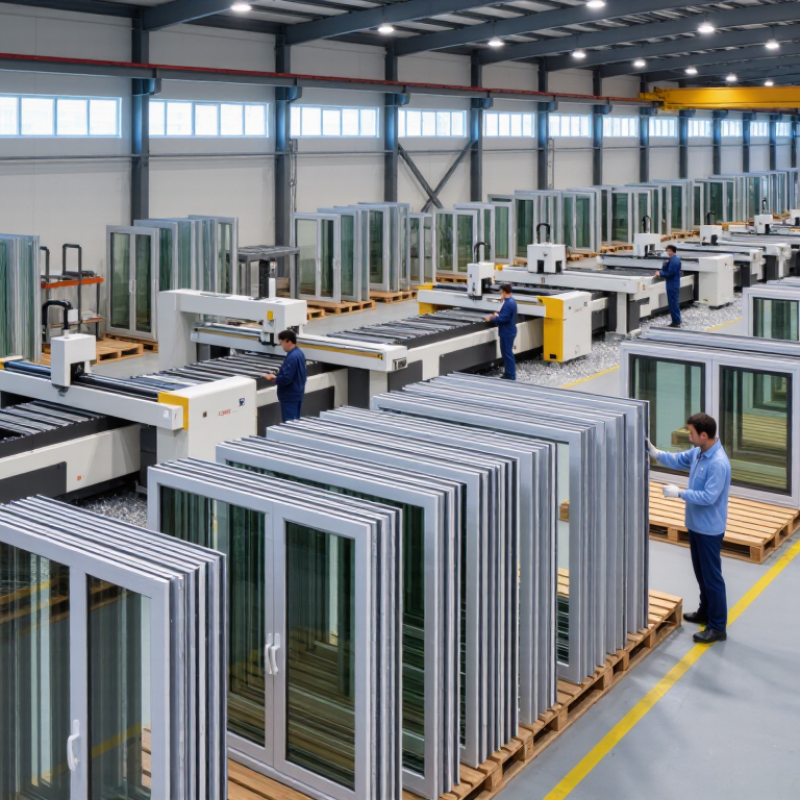
China’s major aluminum window manufacturers are often found in Guangdong, Jiangsu, Zhejiang, and Shandong. These industrial regions offer strong supply chains for aluminum profiles, glass, hardware, and surface treatments. Leading factories usually serve residential towers, villas, offices, and renovation projects. Many operate automated cutting, drilling, and powder-coating lines.
Quality depends on more than factory size. Experienced manufacturers control profile thickness, corner joints, drainage holes, and glass installation. For coastal buildings, they may recommend marine-grade finishes and stainless-steel hardware. Thermal-break systems can reduce heat transfer through the frame. Acoustic glass helps in cities with heavy traffic.
Ask for test reports, production samples, and project references. A reliable supplier should explain air tightness, water resistance, wind-load performance, and warranty limits in clear language. Factory visits can reveal useful details: organized storage, calibrated equipment, clean assembly tables, and labeled materials. Small signs matter.
No factory is perfect. Color differences may appear between production batches. Delivery schedules can also change when glass or hardware supplies are delayed. Some manufacturers present impressive samples but provide weaker components in large orders. Independent inspections and written specifications reduce this risk. Confirm dimensions, opening direction, screen design, packaging, and replacement procedures before production begins.
Products and Technologies Offered by Leading Manufacturers
Top aluminum window manufacturers in China compete through product depth and manufacturing control. Their portfolios commonly include sliding windows, casement systems, folding doors, curtain walls, skylights, and thermally broken profiles. Many suppliers also provide insulated glass units, low-E coatings, acoustic glazing, and powder-coated or anodized finishes. Precision matters.
Technology now targets building efficiency. The International Energy Agency’s 2023 Global Status Report states that buildings consume about 30% of global final energy. This pressure encourages manufacturers to use polyamide thermal breaks, multi-chamber profiles, warm-edge spacers, and airtight gasket systems. Some factories combine CNC machining, automated powder coating, robotic welding, and digital quality inspection. These processes improve dimensional consistency, but automation does not remove every defect.
Leading producers increasingly offer project engineering, shop drawings, sample testing, and installation guidance. Their laboratories may test air infiltration, water penetration, wind pressure, thermal transmittance, and hardware durability. Certification against recognized regional standards gives buyers stronger evidence than attractive catalog images. However, reported performance can vary with glass specification, frame size, installation quality, and site exposure. No factory gets every detail right. Buyers should compare complete test reports, not isolated headline values. Data from the China Academy of Building Research and international energy studies also support a practical lesson: window performance depends on the whole envelope, not the frame alone.
How to Compare Manufacturers for a Project
Choosing a leading aluminum window manufacturer requires more than comparing factory size or export volume. The right supplier must match your project’s climate, building height, and local code requirements. In my sourcing experience, I compare alloy grades, wall thickness, thermal-break design, hardware quality, and coating controls. Ask for batch records, test reports, and current production photos. A polished showroom proves little. A full-size corner sample tells more.
Test the details.
The sample should show installed hardware, clean welds, drainage channels, seals, and glass spacing. Request verified data for air leakage, water resistance, thermal performance, and wind pressure. Check whether those results apply to the exact window series you plan to purchase. They often do not. Manufacturing capacity also matters. Confirm monthly output, lead times, packaging methods, and quality checks before shipment. A low quotation can hide weak inspection procedures or costly delays.
Communication reveals reliability. Ask how the manufacturer handles design changes, damaged units, replacement parts, and installation questions. Review the warranty wording carefully, including exclusions and response times. I once focused too heavily on unit price and underestimated packaging requirements. That mistake made the project more expensive. Factory audits, independent testing, and a small trial order can reduce similar risks. Still, no checklist replaces clear drawings and disciplined site coordination.
Who Are the Top Aluminum Window Manufacturers in China?
How to Compare Manufacturers for a Project
The chart shows an illustrative procurement weighting for comparing aluminum window manufacturers. Thermal performance, air and water tightness, structural capacity, coating durability, certification, and delivery reliability are commonly reviewed in international project specifications. Performance should be verified through test reports and standards such as EN 14351-1, EN 12207, EN 12208, and EN 12210. These percentages are evaluation priorities, not company rankings or market-share data.
FAQS
Reliable manufacturers prove performance with complete test records. Ask for reports linked to the exact window system. A polished sample proves little. Check air leakage, water resistance, corrosion resistance, and repeated operation. No checklist is perfect.
Compare the thermal break, glass type, seals, and drainage design. These parts work together. One weak detail can reduce the whole window’s performance. Check the quoted configuration, not a similar sample. Small differences matter.
Buildings use substantial energy for heating and cooling. Windows may influence 25–30% of residential heating and cooling energy use. Review the U-factor and solar heat gain coefficient. Local climate changes what counts as efficient. The rating needs context.
Request independent reports with exact model numbers and glass combinations. Check sealant details and production dates. Useful records may reference recognized window and thermal-performance standards. Ask how air, water, and wind tests were performed. Do not accept vague figures.
Inspect extrusion tolerances, thermal-break insertion, hardware, packaging, and final checks. Review coating-thickness records and batch traceability. Ask for corner samples and finish swatches. Examine them in ordinary daylight. Certificates alone are insufficient.
Request controlled coating records for each production batch. Check color consistency, surface defects, and coating thickness. Inspect finish samples under natural daylight. A smooth showroom sample may hide production variation. That weakness deserves attention.
Look for traceable material specifications and inspection records. Records should follow products from production to packing. Ask whether technical figures remain consistent during discussions. Repeated sampling provides stronger evidence. Low prices are not enough.
Factory quality cannot repair poor installation. Clear instructions should explain fixing, sealing, drainage, and adjustment. Ask about replacement parts and defect response times. A tested window can still fail on site. This is easy to overlook.
Conclusion
China is home to many capable aluminum window manufacturers, but the leading companies are defined by more than production volume. They typically combine reliable material quality, precise engineering, modern fabrication equipment, strict quality control, and consistent delivery. Their products may include sliding, casement, folding, thermal-break, energy-efficient, and customized systems designed for residential, commercial, and industrial projects. Advanced surface treatments, insulation solutions, sound reduction, weather resistance, and smart design options can further distinguish a manufacturer in a competitive market.
When evaluating an Aluminum Window manufacturer, buyers should consider certifications, production capacity, technical expertise, customization ability, testing procedures, project experience, communication, pricing, lead times, installation support, and after-sales service. A careful comparison should balance product performance and long-term durability with budget requirements. By reviewing samples, specifications, warranties, and production processes, project owners can identify a dependable manufacturing partner that meets architectural needs, climate conditions, safety expectations, and overall project goals.
 Astris Window Systems
